Sunday, October 10, 2010

Cours Mirabeau

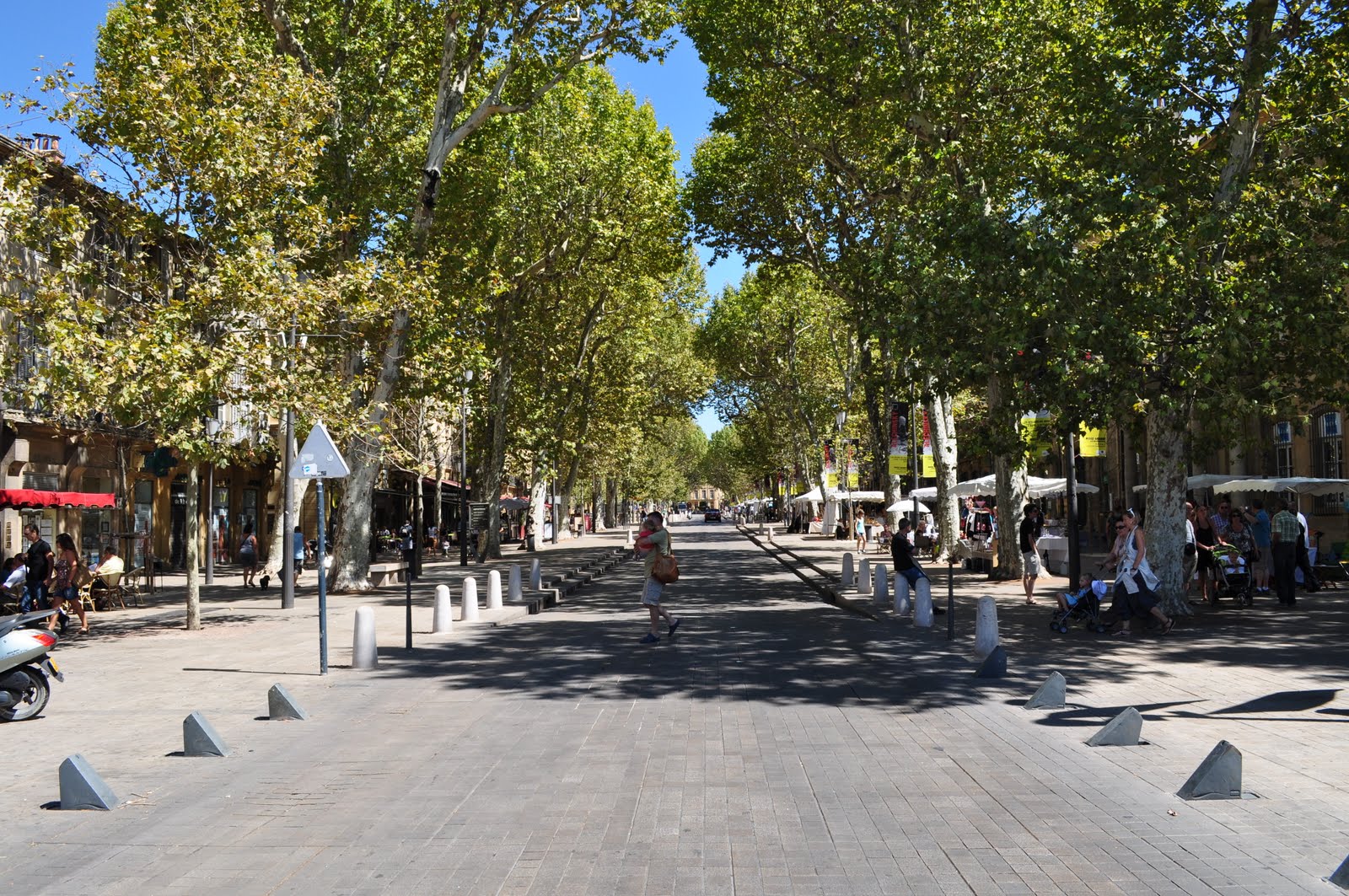
The main promenade in Aix is "Cours Mirabeau". It is 440 meters long and 42 meters wide, and is one of the most popular and lively places in the town.
It is lined with many cafés, one of the most famous being Les Deux Garçons; during its history was frequented by famous French cultural figures such as Paul Cézanne, Emile Zola and Albert Camus. The wide thoroughfare was named after Honoré Gabriel Riqueti, Comte de Mirabeau (March 9, 1749 – 2 April 1791), a French revolutionary, as well as a writer, diplomat, freemason, journalist and French politician at the same time (whew!).


The pretty street has wide sidewalks planted with double rows of plane-trees and divides Aix into two portions, the Quartier Mazarin, (the new town) which extends to the south and west, and the Ville comtale, (the old town) which lies to the north with its wide but irregular streets and its old mansions dating from the 16th, 17th and 18th centuries. (BTW, to us it's all old!!!)
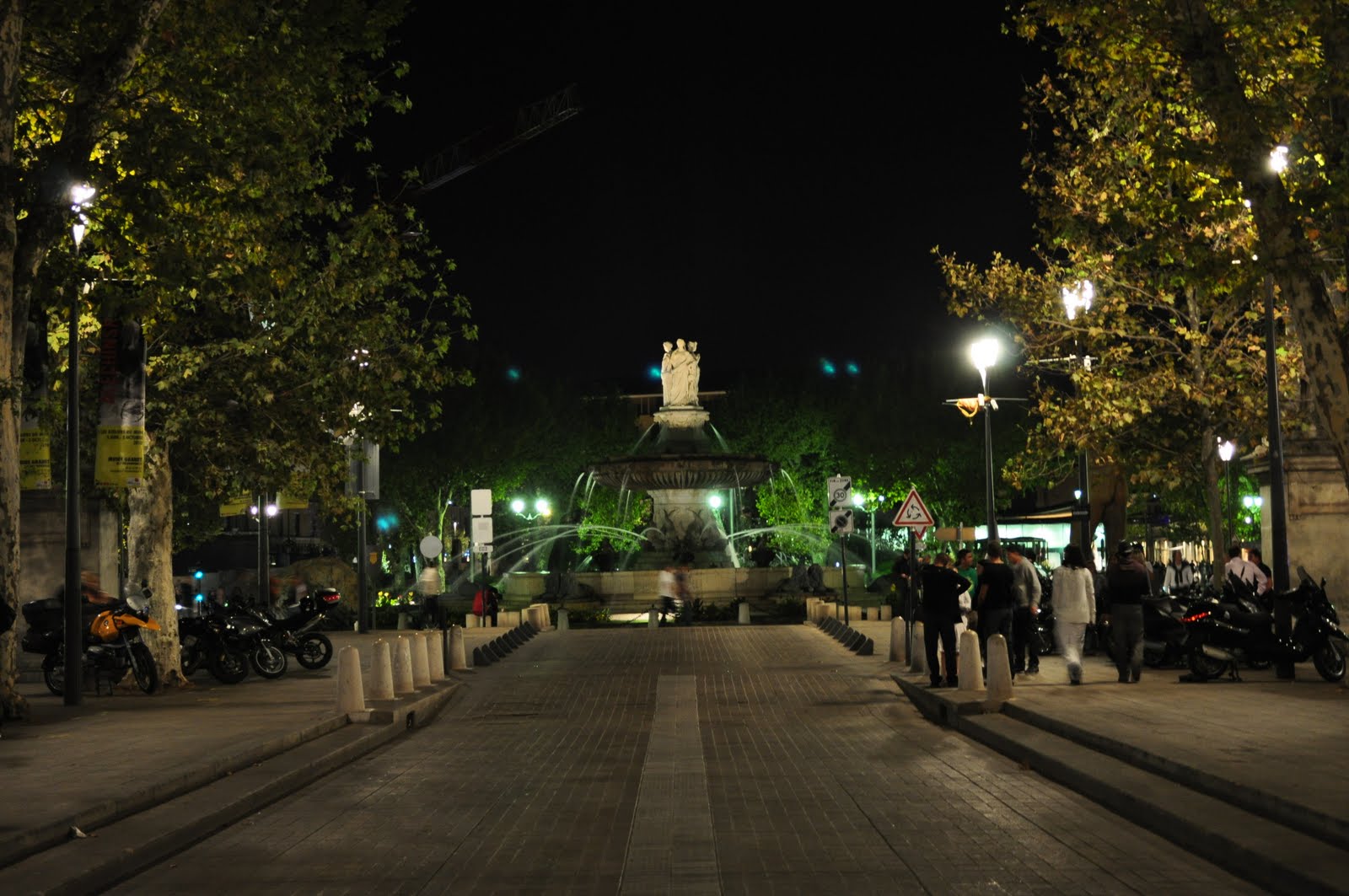
In the middle of the avenue (spaced well apart) stand three beautiful fountains, the center one of which, the "Fontaine Chaude", is fed with warm spring water. The Place du Général de Gaulle forms the western boundary of the line of streets, where the great Fontaine de la Rotonde stands (pictured).

It is such an atmospheric place, perfect for a morning coffee, afternoon wine or a post dinner Amarino ice cream. And it is THE spot for people watching! We have been enchanted by Cours Mirabeau and have taken many photos - some of which can be viewed by following the link to the right.

Aix by night

Aix is a wonderful town to wander through on a balmy summer evening, although the change of season is clearly here. The air now has a discernable chill at night and the rain is appearing. We are located close to the centre of the old town and it affords us the opportunity to explore all that "old" Aix has to offer.

Quite apart from the beautiful Cours Mirabeau (the main thoroughfare through the old town), the side streets are full of shops, boutiques, cafes and restaurants. There are many squares (places) scattered through Aix, all offering a space for people to collect. As Aix is a university town, there is always plenty of lively students out and about, adding to the atmosphere.

We have attached a link (right) with a collection of photographs highlighting some of the side streets by night.

Sunday, October 3, 2010

Avignon

When planning our holiday, we laboured over the choice between Avignon and Aix. A return to Avignon confirmed that our difficulty in choosing was justified. Avignon is on the banks of the Rhône river and is sprinkled with buildings and monuments ranging from the new to the old, the very old, and the ageless.

We noticed a new modern art addition to the main town square.


Quite inconguous but somehow in typical French fashion, it seemed to fit perfectly!


So too did the modern dancing by the local
lads in the ancient square.


The city is well known for its ''Palais des Papes'', where several popes and antipopes lived from the early 14th to early 15th centuries. Ramparts, built by the popes still encircle Avignon and they are one of the finest examples of medieval fortification in existence. They were erected to keep the plague and invaders out during the turbulent middle ages, when Avignon belonged to the papacy.

A popular attraction is the Le Pont Saint-Benezet, a ruined bridge not far from the Palais des Papes. The bridge was also built in the Middle Ages, but soon became unsafe and following numerous floods, mostly derelict. Originally, the bridge had 22 arches but only 4 of the 22 arches now remain.

It would have been a beautiful site!

Tarte fine aux tomates

This weekend we had some local friends over for dinner. A little intimidated, we kept the fare simple and discovered a wonderful recipe that would be a perfect match for a beautiful Australian summer day. The recipe is from an apt cook book by Alex MacKay (with Peter Knab) "Cooking in Provence" (see link on right).


A tomato tart, it was dead easy to make, if a little time consuming. It looked quite impressive and was well received, so we thought we would share. Unfortunately, no photo (seemed a little poncy to do so in front of our guests!!!). This picture looks nearly as good as the tart this recipe produced. Hope you can make use of it one day.

Tarte Fine Aux Tomates by Alex Mackay

350g (12oz) puff pastry
1.5kg (3lb 5oz) tomatoes, all about the same size
150g (51/2oz) mascarpone (We used 250grams)
50g (13/4oz) Parmesan, freshly grated
1 biggish bunch fresh basil, leaves picked from the stalks, sliced
Salt and freshly ground pepper

Preheat oven to 200c. Roll the puff pastry into a circle slightly larger than 30cm (12in) in diameter. (You can use a plate). Put the pastry circle on a tray and let it rest in the fridge for 20 minutes or so. Remove the cores from the tomatoes and slice them about 5mm thick. Keep the slices together and put the ends in a separate pile.

Mix the mascarpone with the Parmesan and basil and season well. Spread the mascarpone across the centre of the pastry circle, leaving about 10cm (4in) at the edges. Layer the sliced tomatoes around the outside of the cheese, making a full circle. Overlay them by about one third of each slice. Continue towards the centre in ever-decreasing circles, overlapping the earlier circle each time. Tuck the tomato ends under each layer to prevent them caving in, then continue toward the centre. Put the last slice right in the middle. (Your tart will get higher towards the centre, but this flattens during cooking).

Bake the tart in the preheated oven for 30 minutes, then turn the oven down to 150c and bake for a further 45 minutes. When cooked there should be almost no liquid left in the tomatoes and the pastry base will be crisp. (The tomatoes we used were really juicy so we cooked it for an additional 15 minutes).

Voila et bon appetit !

Thursday, September 23, 2010

Cassis

Cassis is located about 50 kms from Aix, on the coast. It is a most spectacular location and epitomises the Mediterranean seaside village. We loved everything about it - the cliffs, the clear clean blue ocean, the impressive boats in the harbour, the salty beach smell, the fish swimming so close you could reach out and grab them, and the aromas from the restaurants lined along the harbour. A "must have" is the moules et frites, a delicious bowl of mussels with a sauce of saffron, fennel, cardamon, star anise, garlic and cream served with chips. This is to be accompanied by a large beer. Pure heaven!

Don't believe us - put this spot on your bucket list and see for yourself !


Markets


Going to the morning food markets is a highlight of our daily routine and certainly gives our senses an outing. Along with the great variety of seasonal produce, there is often a busker to add to the bustling atmosphere. There is colour in both character and goods.

While it can get very busy, there is plenty of room to move, time to procrastinate and many opportunities for us to practice our French. September is the season for mushrooms. We were amazed at the number and variety - many of them looking like something out of Doctor Who!

It is difficult to capture the experience, but we have taken some photos in an attempt to share our impressions (see right).

Wednesday, September 22, 2010

Pilgrimage to Mont Sainte-Victoirre

Here are some photos of our mountain climbing expedition yesterday!

Mont Sainte-Victoirre is a symbol of Provence and a major landmark of the Aix area. It reaches an altitude of 1011 metres.

At its peak, there is a 17th century priory (a place of pilgrimage) and the cross of Provence, from where there is a magnificent panoramic view of Provence's mountains and the rolling plains of the Aix area.

The mountain was also made famous via eleven oil paintings and seventeen watercolors by Paul Cézanne.

In the middle ages when Christianity made its appearance, the mountain was sanctified to hunt the demons of paganism. This was our pilgrimage to mitigate against our demons, the French food and wine!